 Image 1 of 1
Hailey
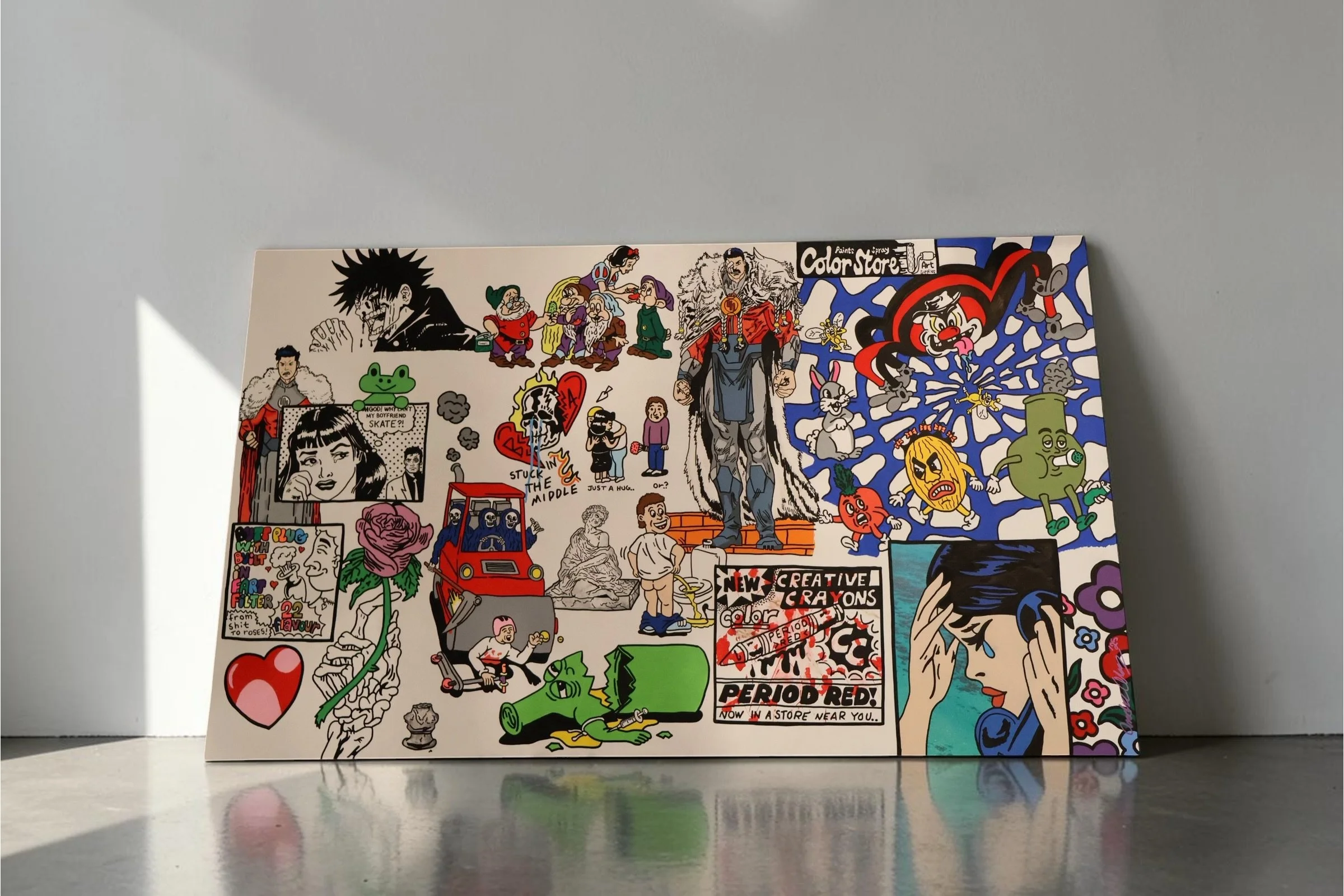
Hailey is a visual record of a relationship that was passionate, destructive, confusing, and deeply important to who I eventually became. I create collages after breakups because they allow me to express emotions that are difficult to organize into words. They help me process the pain while also appreciating what the relationship gave me, even when what it gave me was a difficult lesson.
Alcohol played a destructive role in this relationship. I began drinking constantly, getting blackout drunk, and becoming a version of myself I no longer recognized. What began as something we did together eventually became a coping mechanism I carried on my own. I felt myself being pulled downward, but I remained because I confused intensity with intimacy and being wanted physically with being genuinely valued.
I wanted the relationship to become something deeper, but I often felt reduced to sex. Private details about our intimacy were shared with mutual acquaintances, even if they were presented positively, and that still made something personal feel exposed. Those same acquaintances carried stories between us, feeding each of us different versions of the other’s life. Truth became tangled with rumor until the relationship felt like a web. The more I struggled to understand what was real, the more trapped I became.
The collage reflects that emotional disorder. Separate characters, symbols, advertisements, jokes, broken hearts, and unsettling images compete for space because that is what the relationship felt like inside my head. Attraction existed beside resentment. Love existed beside humiliation. Good memories survived alongside behavior that was hurting both of us. The web represents addiction, gossip, sex, insecurity, and the unhealthy attachments that kept me somewhere I knew I was losing myself.
Thragg from Invincible represents the version of power I once believed I needed. I wanted to become untouchable, dominant, and so powerful that nobody could ever make me feel small again. Over time, I learned that masculinity is not controlling other people, hiding emotion, or refusing to be hurt. Real strength is having boundaries, accepting responsibility, walking away from what destroys you, and refusing to abandon yourself just to keep someone else.
Megumi from Jujutsu Kaisen represents the moment that thinking began to change. His Domain Expansion comes when he stops limiting himself through fear and finally risks believing in his own potential. That moment became a symbol for my own decision to go all in on myself. Instead of imagining a stronger version of who I might become, I had to begin creating him.
Robert Greene writes in The 48 Laws of Power, “Re-create yourself.” That became the most important lesson I carried away from this experience. My worth was not determined by whether Hailey chose me, desired me, embarrassed me, or understood what I wanted. I had to decide what I was worth and stop handing that decision to another person.
Hailey does not erase the relationship or pretend that every part of it was terrible. It preserves what I felt while recognizing what it cost me. The piece is about losing myself inside another person, confronting the unhealthy ways I tried to cope, and eventually understanding that becoming powerful did not mean defeating her. It meant finding myself again.