 Image 1 of 1
Year: 2026
Size: 12 × 16 inches
Display: Black frame
Medium: Watercolor
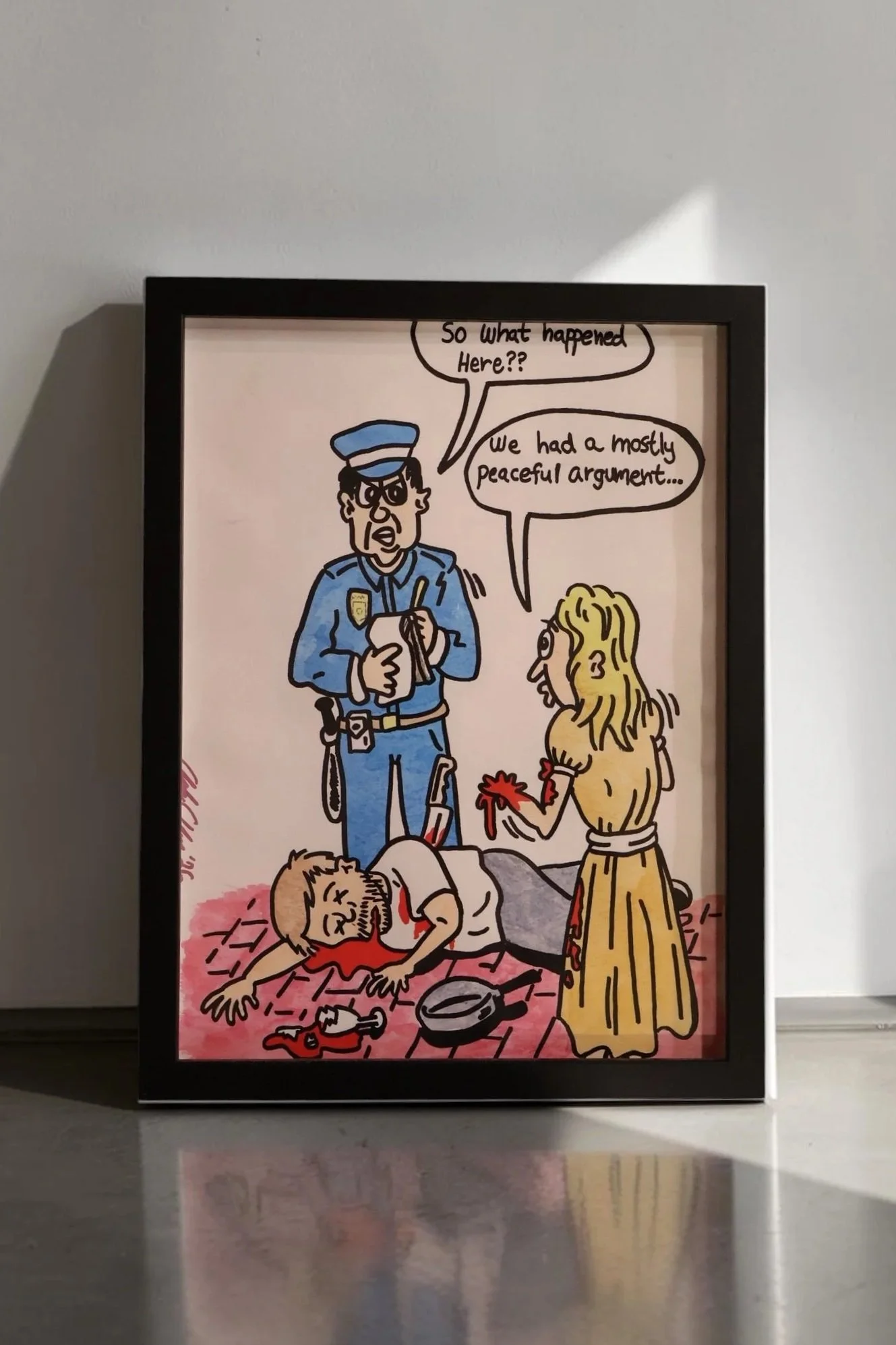
A police officer questions a woman as she stands over the body of her dead husband. When asked what happened, she calmly responds, “We had a mostly peaceful argument.” The destruction surrounding her immediately contradicts the statement. Her husband lies dead, the dinner he prepared has been scattered across the floor, and the woman’s hands still carry the evidence of what she has done.
The phrase “mostly peaceful” is deliberately absurd. An argument that ends with one person dead cannot be described as peaceful, yet the woman uses soft and carefully selected language to reduce the severity of her actions. Her words become another weapon, allowing her to reshape violence into a story in which she may appear frightened, confused, or innocent.
The husband cooked dinner and shared wine with her, creating what should have been an intimate and caring evening. She responded by stabbing him from behind. The location of the wound challenges any immediate claim of self-defense. He was turned away from her and unable to see the betrayal coming, making the physical attack inseparable from the emotional betrayal within their relationship.
The police officer represents the uncertainty of anyone forced to understand an event through the testimony of the surviving person. He can document the evidence, but he did not witness what happened before he arrived. The woman understands this advantage. She appears capable of lying easily because she knows that her husband can no longer contradict her version of the story.
The viewer occupies a different position from the officer. We are not limited to her words. We can see the contradiction between her calm explanation and the brutality surrounding her. This perspective exposes the evil hidden beneath her performance and turns the audience into the only reliable witness.
A Mostly Peaceful Argument explores deception, intimate betrayal, and the power of language to disguise violence. The painting asks how often the person who controls the story is mistaken for the victim, especially when the other person is no longer alive to speak.