 Image 1 of 1
Year: 2025
Size: 5 × 7 inches
Medium: Watercolor
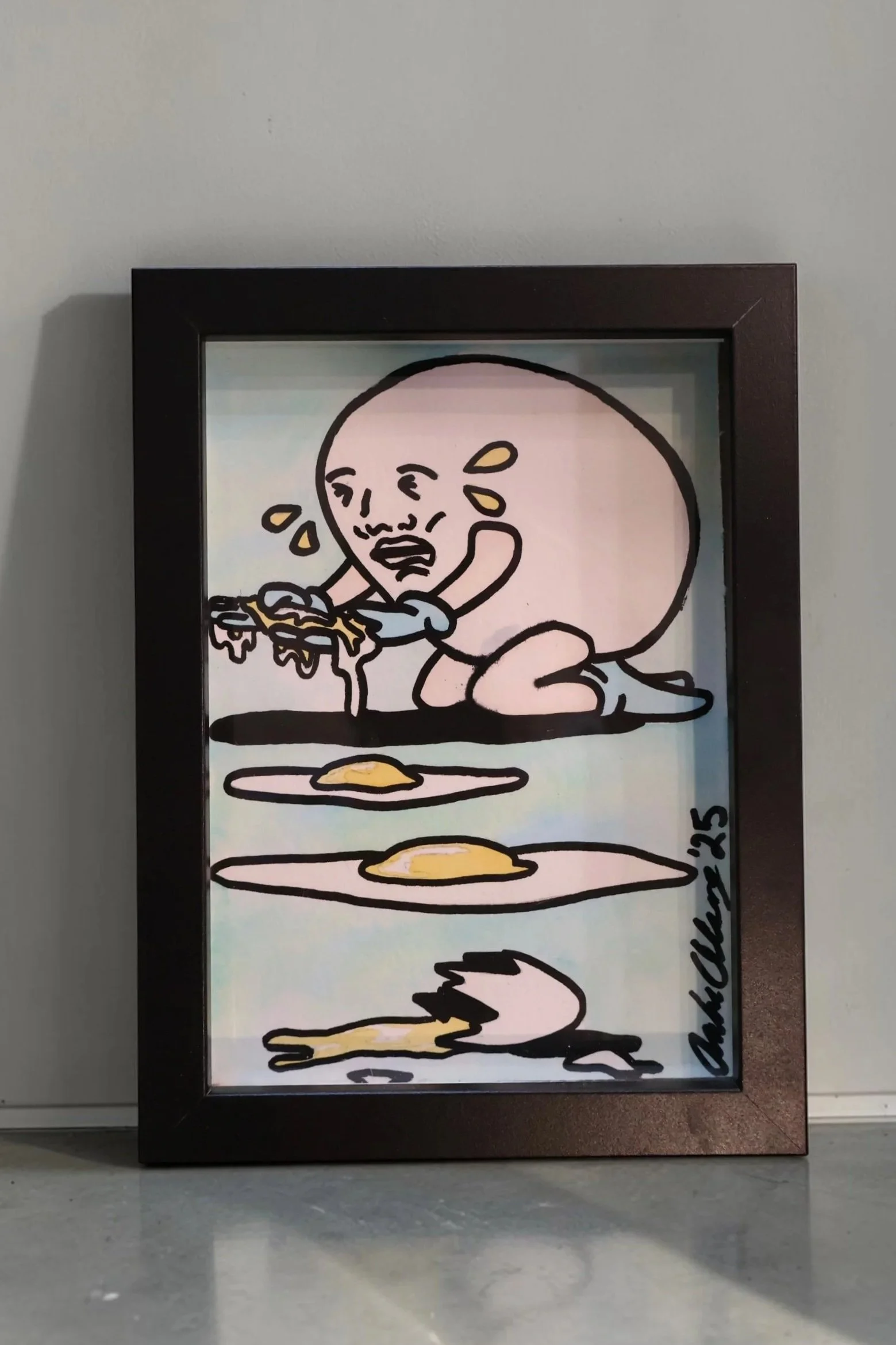
A Humpty Dumpty-like figure kneels among the broken shells and spilled yolks of everyone he once loved. He arrived too late to save them and can only stare at what remains. The familiar nursery-rhyme imagery transforms death into something visually simple and almost childish, while the surviving figure’s grief reveals the unbearable reality beneath it.
The broken eggs represent the fragility of human connection. Every person he allowed himself to love eventually became someone he could lose. Their shells could be protected for a while, but never permanently. Accident, illness, time, separation, and death were always waiting outside the frame.
The surviving friend has not only lost the people around him. He has lost the version of himself that existed with them. Each relationship gave him a different identity, memory, and reason to remain hopeful. Now he is surrounded by evidence that happiness can end without permission and that surviving someone can feel like another form of punishment.
The painting explores the frightening logic that loneliness may be the safest answer to pain. If love inevitably ends, avoiding attachment can appear to be an act of self-preservation. A person must be unusually strong, or unusually afraid, to reject love because he already understands the grief it may eventually create. He chooses isolation not because he feels nothing, but because he feels too deeply to risk losing anyone again.
Even the happiest possible ending carries tragedy. Two people might spend their entire lives together, but unless they die at the exact same moment, one must experience a world in which the other no longer exists. The best imaginable outcome still asks someone to be left behind.
Best Case Scenario does not claim that loneliness truly removes suffering. Instead, it captures the moment when grief convinces someone that connection is no longer worth its cost. The kneeling figure has survived, but survival has not made him feel fortunate. He remains physically whole while everything that once made him feel complete lies broken around him.