 Image 1 of 1
2025
5 × 7 in.
Watercolor and Ink on Paper
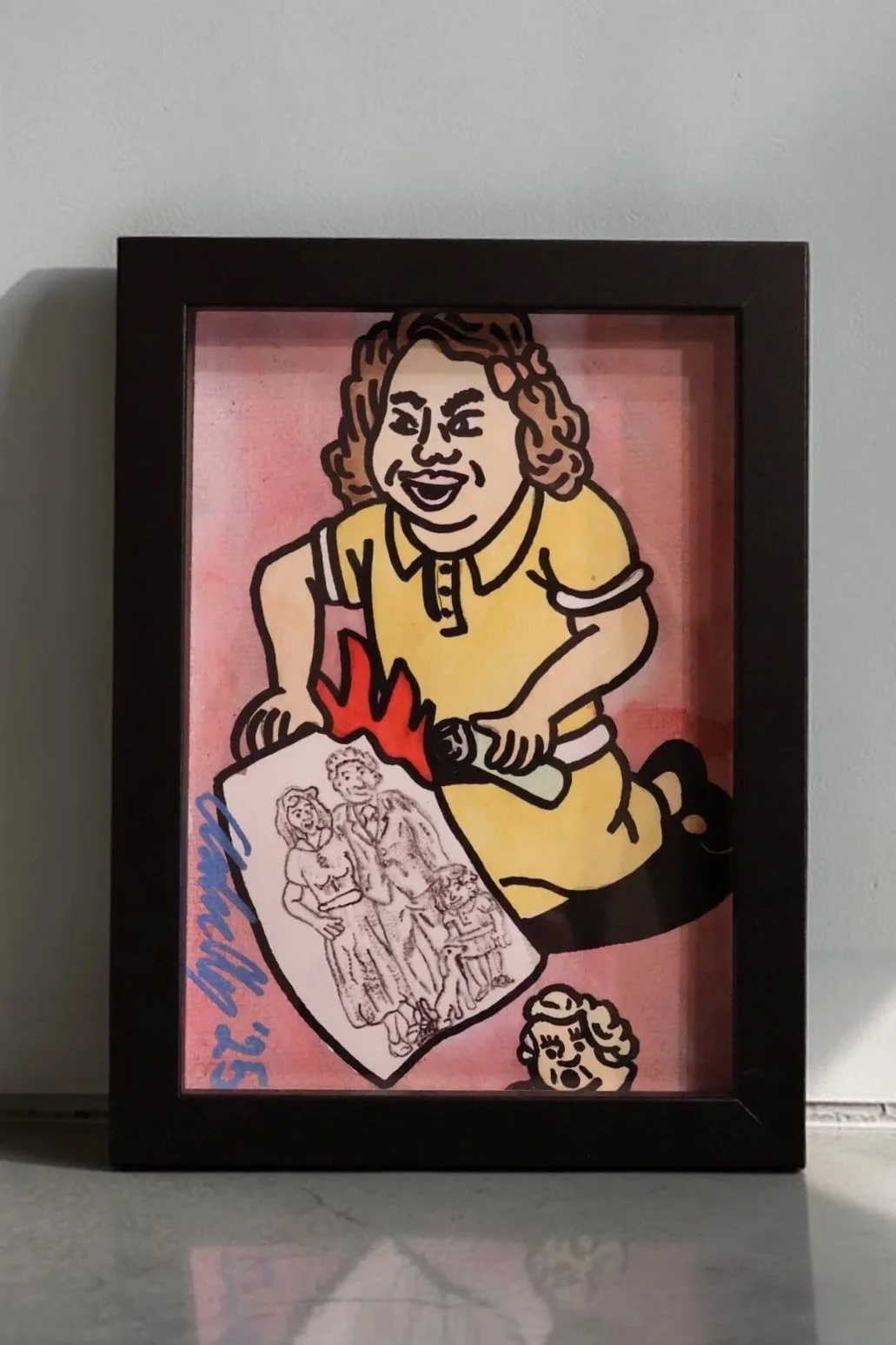
The daughter kneels over a family portrait and sets it on fire. The photograph shows the version of her family that was supposed to be real: a mother, a father, their children, all together. But to her, the photograph has become evidence of something that never truly existed.
She has grown up watching her father lie to her mother, disappear into nightlife, cheat, steal, and continually choose himself over his family. Unlike her mother, who copes with the truth by drinking, the daughter responds by destroying the image of the family altogether. She is no longer interested in protecting the illusion.
The fire represents more than anger toward her father. She is burning the idea of who she thought he was. As the photograph disappears, so does the childhood version of her family that she once believed in. She cannot change what her father has done, but she can decide that his lies will no longer determine what family means to her.
Her smile creates an uncomfortable contrast with what she is doing. There is anger in the destruction, but there is also relief. Sometimes accepting that something was never what you believed it to be can feel strangely freeing.
Burning Memories continues the story introduced in The Smell of a Lie and Love on the Rocks. The father creates the lie, the mother drinks to survive inside it, and the daughter finally decides to burn it.