 Image 1 of 1
Music
Year: 2024
Size: 6 × 6 inches
Medium: Acrylic on canvas
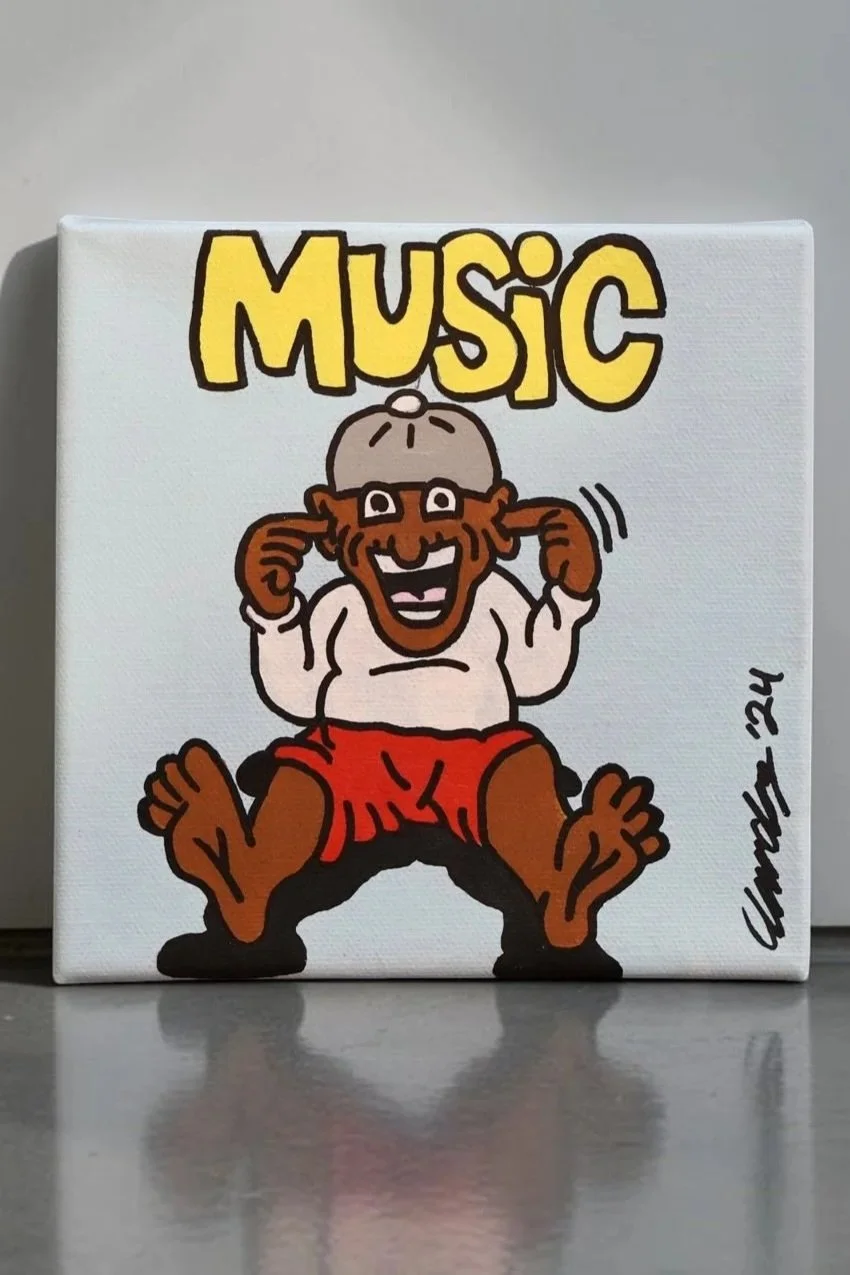
A smiling figure sits beneath the word “MUSIC,” but instead of listening, he has pushed his fingers into his ears. His expression appears joyful, creating the illusion that he is enjoying what surrounds him. In reality, he has completely blocked it out. The contradiction creates a satire about the difference between loving music and loving the identity associated with it.
Music is often treated as a form of self-expression, yet many people allow popularity to determine what they hear. A song becomes valuable because it is trending, because the right people approve of it, or because listening to it supports a desired image. Taste can become another performance. People learn what they are expected to enjoy and repeat those preferences until popularity begins to feel like personal connection.
The figure represents someone who wants to participate in the culture surrounding music without becoming emotionally vulnerable to music itself. He is happy to sit beneath the label and present himself as a listener, but he refuses to hear anything unfamiliar. His smile suggests comfort, while the fingers in his ears reveal resistance.
The large yellow word above him functions almost like a brand name. It announces “MUSIC” in the same exaggerated style used to sell entertainment, but it does not identify a genre, artist, emotion, or memory. The word has been reduced to a recognizable product. It is music stripped of the private experience that gives it meaning.
The painting questions whether people choose songs because those songs genuinely move them or because they have been taught that enjoying them is socially correct. Familiar music offers safety. It allows listeners to belong to a group and communicate an identity without having to explain themselves. Exploring unfamiliar music is riskier because it may awaken an emotion that has no approval, category, or audience.
The figure’s ears become the most important part of the painting. Music is physically present, but he has chosen not to receive it. His refusal reflects the way people can protect themselves from emotional discovery. A song may uncover grief, loneliness, tenderness, fear, or desire that a person has spent years avoiding. Blocking out the sound can become a way of blocking out the self.
For a long time, I did not fully understand what music could reveal about me. It was easy to hear songs as entertainment without asking why certain sounds stayed inside me. I did not discover that deeper part of myself until I became lonely, lost the friendships that once defined my life, and was forced to exist without the identities those relationships had given me.
Loneliness created a silence that popularity could not fill. Without friends around me influencing what I listened to, what I enjoyed, or who I was expected to be, I began to hear music differently. I stopped listening for what was current or socially recognizable and started noticing what made me feel something physically and emotionally.
“Varúð” by Sigur Rós became one of those songs for me. It reaches me beyond language and explanation. I do not need the song to be popular, easily understood, or connected to a version of myself that other people recognize. Its slow emotional build makes me feel something that I cannot fully name. It creates movement inside me before my mind has time to decide whether I am supposed to enjoy it.
That experience represents the opposite of the figure in the painting. He refuses to listen because genuine listening may change him. I eventually learned to remove my hands from my ears and allow music to reach the parts of myself I had not yet met.
Losing my friends was painful, but it also separated me from the person I had learned to be around them. Their absence forced me to ask which parts of my identity were truly mine. Music became one of the ways I began answering that question. It gave me permission to feel without first explaining myself to another person.
The painting does not suggest that popular music is empty or that enjoying something fashionable is dishonest. A popular song can still create a real emotional connection. The satire is directed at the refusal to explore beyond what has already been approved. The problem is not liking what everyone else likes. The problem is never asking whether you actually like it.
The figure’s exaggerated smile adds another layer to the satire. He appears happy because happiness is the emotion he believes he should display. Yet his body is actively resisting the sound. His expression may be less a reaction to music than a performance for anyone watching. He wants to look entertained without risking the personal exposure required to be moved.
Music explores the difference between hearing sound and allowing it to enter you. It asks whether taste is something we discover within ourselves or something we inherit from the people around us. It also considers how loneliness, although painful, can create enough silence for an authentic identity to emerge.
The figure plugs his ears because he does not want music to tell him something he is not prepared to know. I understand him because I once lived closer to that resistance. It was only after the noise of friendship, expectation, and belonging disappeared that I could hear what genuinely moved me.
The painting is ultimately about becoming yourself through listening. Sometimes the music that changes you is not the music everyone else has chosen. Sometimes it is the sound that finds you when you are finally alone enough to hear it.