 Image 1 of 1
MasterChef
Year: 2024
Size: 6 × 6 inches
Medium: Acrylic on canvas
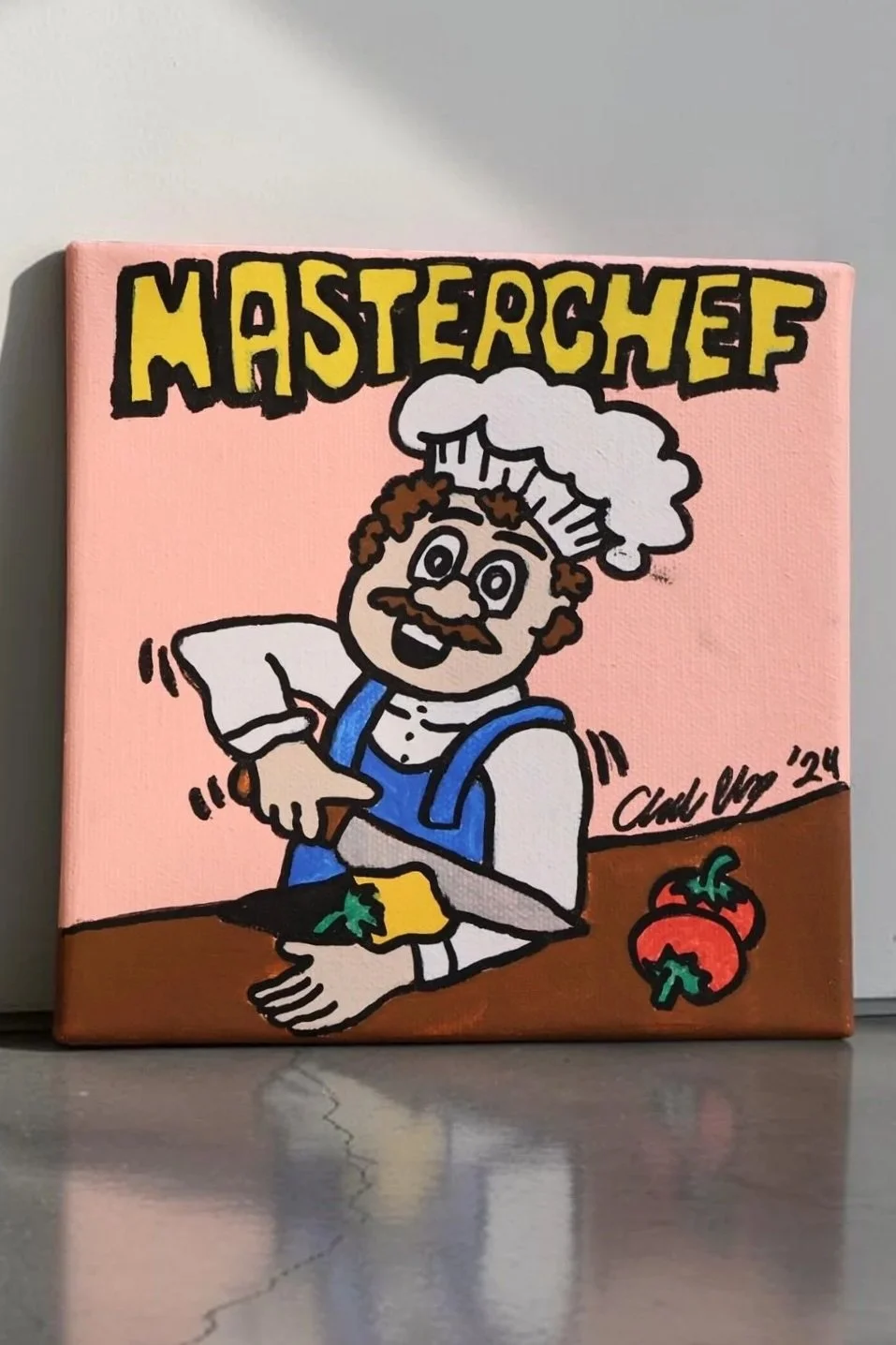
A chef attempts to slice a pepper but has become so distracted that he is using his own arm as a cutting board. His knife rests dangerously close to his skin while the actual counter remains directly in front of him. The word “MASTERCHEF” appears above the scene, celebrating him as an expert even though his actions suggest that he may have no idea what he is doing.
The painting begins as a visual joke. A person given the title of “master” should demonstrate control, experience, and precision, yet this chef cannot recognize the danger immediately beneath his knife. His uniform allows him to look competent, but his appearance does not guarantee that he is prepared for the task.
The title satirizes the way people are often rewarded or respected because of how they present themselves. A uniform, title, or confident expression can convince others that someone is capable. The chef may have learned how to resemble a professional without developing the awareness required to act like one.
His distraction is the real danger. The knife is not attacking him by itself, and no other person is threatening him. He is being harmed by his own failure to remain present. The scene exaggerates an ordinary mistake to show how quickly carelessness can become serious when a person stops paying attention to what they are doing.
The pepper introduces another layer of absurdity. It is small and harmless, yet the chef risks sacrificing part of himself to prepare it. The task is not important enough to justify the danger, but distraction has distorted his sense of proportion. He is so focused on finishing what is in front of him that he cannot see what it may cost.
This can reflect the way people move through everyday life. Work, pressure, relationships, ambition, and routine can demand so much attention that a person stops noticing the harm occurring within them. They continue completing tasks, meeting expectations, and appearing functional while treating their own body and emotional well-being as something disposable.
The painting can also be interpreted as an image of self-harm. The chef’s action appears accidental, but the knife touching his arm creates uncertainty about whether distraction is the full explanation. His shocked expression may represent someone who did not understand how much danger he was in until the damage had already begun.
That ambiguity matters because emotional suffering is not always visible or easily explained. A person may joke, smile, work, cook, and continue with ordinary responsibilities while privately struggling with urges to hurt themselves. From the outside, their behavior may look careless, dramatic, or confusing. Internally, they may be trying to survive pain they do not know how to communicate.
The chef’s title can therefore become a mask. “Masterchef” tells the viewer that he is in control, while the image reveals the opposite. In the same way, people may be described as strong, successful, independent, or dependable while feeling completely overwhelmed beneath those identities. Being capable in one area of life does not make someone immune to emotional suffering.
The painting does not treat self-harm as a punchline. The humor belongs to the absurd cooking mistake, while the deeper interpretation asks the viewer to recognize when laughter may be covering something more serious. Comedy can make a difficult subject approachable, but it should not erase the reality of the pain beneath it.
The knife also represents how an ordinary object can change meaning depending on the emotional state of the person holding it. In one context, it is simply a kitchen tool. In another, it becomes a danger. The shift reminds us that safety depends not only on the object itself but also on attention, intention, and whether someone has the support they need.
The chef is surrounded by food and dressed to create something nourishing, yet he is about to injure the person responsible for making it. This contradiction reflects how people can care for everyone and everything around them while neglecting themselves. They may offer comfort, complete responsibilities, and provide for others without believing they deserve the same protection.
Masterchef explores the line between confidence and carelessness, humor and pain, accident and intention. It asks whether the chef is simply distracted, pretending to possess skills he does not have, or expressing suffering that no one around him has recognized.
Most importantly, the painting reminds viewers that needing help does not make someone weak, incapable, or undeserving of the title they have worked to earn. A person can be talented and still struggle. They can appear happy and still be in pain. They can be surrounded by people and still need someone to notice.
If this image reflects something you are experiencing, please tell someone you trust and seek support. In the United States, you can call or text 988, or visit 988lifeline.org to chat with a trained crisis counselor at any time. The service is available 24 hours a day, is free and confidential, and can also support people experiencing emotional distress even if they are not considering suicide. If you or someone else is in immediate danger, call 911 or go to the nearest emergency room.
The chef’s mistake does not need to become his ending. The knife can be placed on the counter, the wound can be treated, and another person can help him finish what he was trying to do. Reaching for help is not abandoning the work. It is choosing to remain here long enough to continue it.