 Image 1 of 1
Fart
Year: 2024
Size: 6 × 6 inches
Medium: Acrylic on canvas
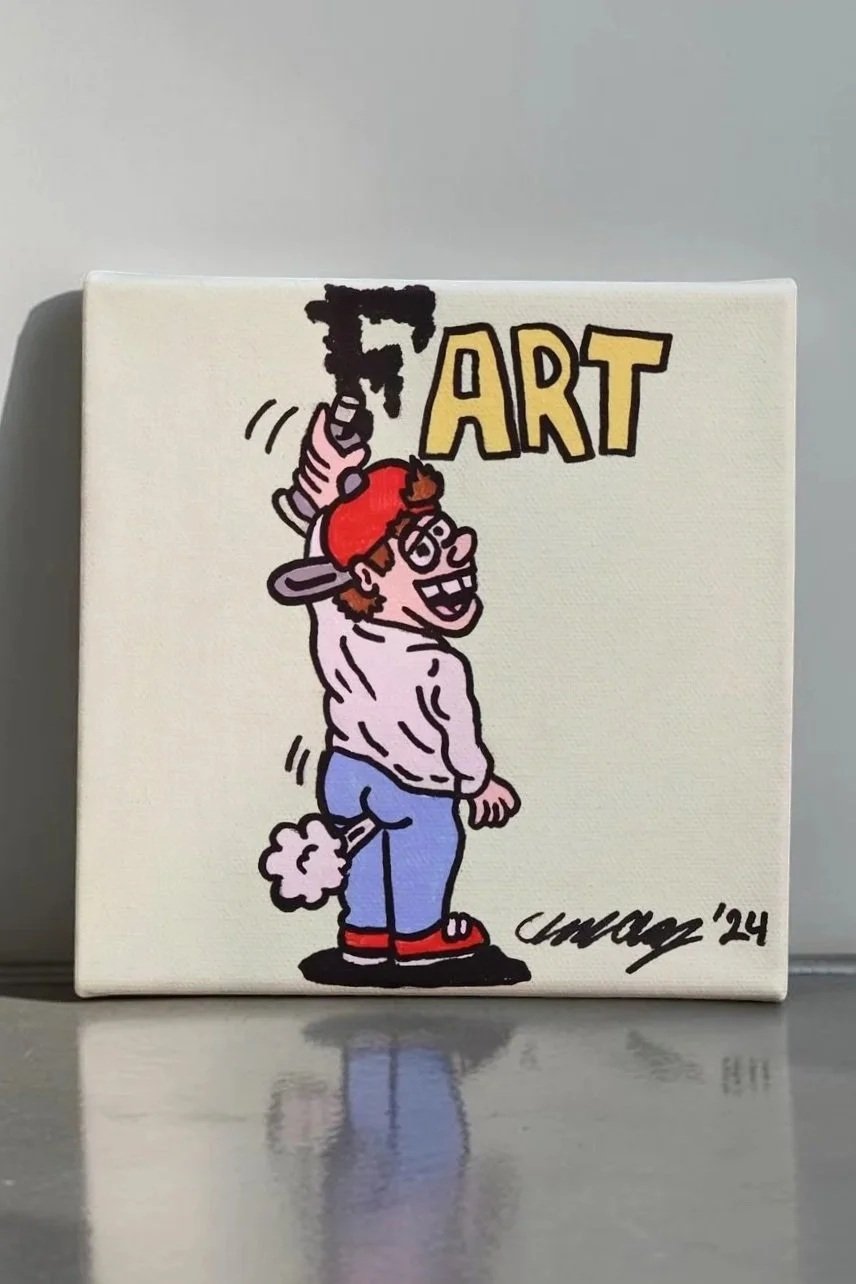
A mischievous artist stands beneath the word “ART” with a spray can raised above his head. Instead of creating a traditional image, he paints a large black “F” in front of the word, transforming “ART” into “FART.” At the same moment, he is farting himself, turning the completed word into both a joke and a description of the action taking place.
The painting is intentionally silly. It takes a subject that is often treated with seriousness and intellectual importance and reduces it to one of the simplest forms of humor. The artist is not attempting to create something elegant, sophisticated, or emotionally devastating. He is amusing himself by making a childish joke and permanently placing it on a wall.
The spray can gives the figure a rebellious quality. He appears to be committing a small act of vandalism, but he is not writing a political message or claiming territory. He is using the freedom and danger associated with graffiti to add a single ridiculous letter. His rebellion has no grand purpose beyond making himself laugh.
The added “F” also becomes a miniature act of artistic transformation. The figure does not erase or destroy the original word. He changes its meaning by contributing one new element. With a single letter, a serious concept becomes a bodily function. The joke demonstrates how even the smallest creative decision can completely alter the way an image or word is understood.
The painting makes fun of the pressure to explain art as though every creative choice must contain a profound message. Artists are often expected to defend their work with complicated language and hidden symbolism. Fart refuses that expectation. The central idea is immediately visible: the man adds an “F” to “ART” while farting.
At the same time, the joke creates its own accidental meaning. The figure is still making art, even if the result is crude. His humor, timing, lettering, placement, and decision to alter the word are all creative choices. By attempting to ruin “ART,” he produces another artwork. The vandalism becomes the subject, the joke becomes the concept, and the fart becomes part of the performance.
The image also questions who has the authority to decide what deserves to be called art. A carefully rendered portrait can be art, but so can a cartoon of a man farting. Art does not stop being art simply because it is immature, funny, or intentionally stupid. Humor can communicate an idea just as effectively as seriousness.
The figure appears proud of himself. His grin suggests that he knows exactly how ridiculous his contribution is and considers that ridiculousness a success. He does not need approval from a gallery, critic, or audience. He has changed the word, completed the joke, and entertained himself. That is enough.
The physical fart behind him makes the joke impossible to separate from his body. He is not only writing the word; he is performing it. His body becomes part of the artwork, creating a brief and absurd connection between language, action, and image. He is simultaneously the artist, the subject, and the punchline.
The empty background keeps all attention on the figure and the altered word. There is no environment to explain where he is or why he is doing this. The simplicity makes the scene resemble a visual gag from a comic strip, where one action is enough to communicate the entire story.
Fart celebrates the part of creativity that exists purely for amusement. Not every piece needs to carry grief, trauma, identity, or a complicated philosophical argument. Sometimes making art means noticing that adding one letter to a word would be funny and then committing fully to the joke.
The painting ultimately asks a deliberately unserious question: if someone turns “ART” into “FART,” has he destroyed the art or created more of it? Either way, he seems extremely pleased with himself.