 Image 1 of 1
Year: 2026
Size: 8.5 × 11 inches
Medium: Watercolor
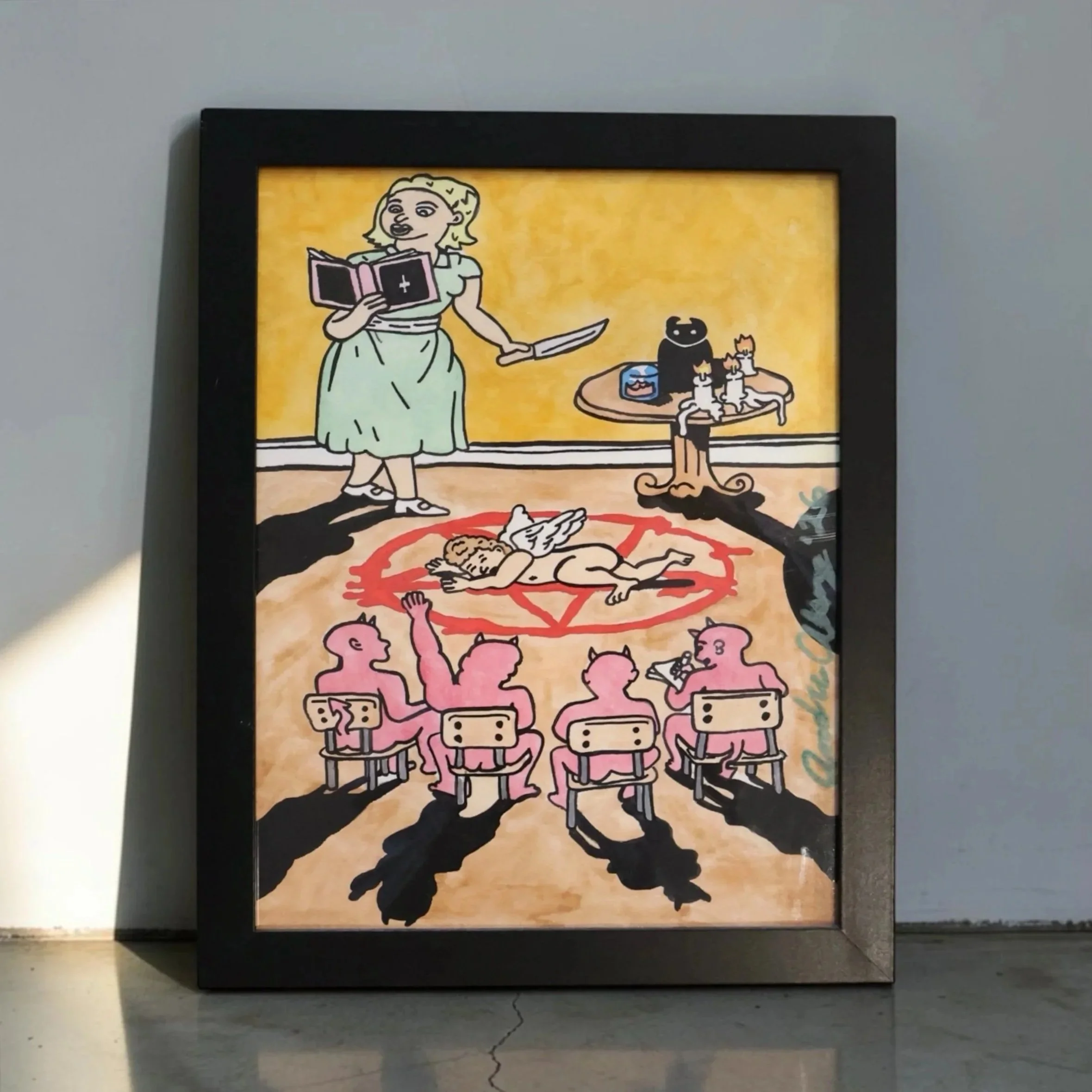
A woman stands before a classroom of young demons, teaching them how to sacrifice an angel. The scene resembles an ordinary school lesson, but the subject being taught is the destruction of innocence. This contrast turns the painting into a darkly humorous exploration of how cruelty is learned, demonstrated, and eventually accepted as normal.
The demons appear almost childlike. They raise their hands, take notes, and watch their teacher for instructions. Their behavior suggests that evil may not always begin naturally. Hatred, violence, prejudice, and manipulation can be taught by authority figures, families, institutions, and the environments in which people are raised. The classroom represents the places where one generation passes its damage to the next.
The angel represents innocence, compassion, and the part of ourselves that still believes goodness matters. By placing the angel at the center of the lesson, the painting asks what must be sacrificed before someone can completely belong to a destructive group. Sometimes acceptance requires people to silence their empathy, ignore their conscience, or participate in something they know is wrong.
The teacher is not completely confident. She holds the knife, but her expression suggests that she may be asking herself, “Can I actually do this?” The book gives her instructions, yet following instructions does not free her from responsibility. Her hesitation represents the final moment when a person can still choose between obeying what they were taught and listening to their own conscience.
The whiskey symbolizes the need to numb that conscience. It may give her enough courage to continue, but it also shows that some part of her understands the horror of what she is about to do. The demon cat makes evil appear domestic and strangely comfortable. It sits beside the candles as if sacrifice were simply another household routine. Even the darkest behavior can begin to feel normal when it becomes part of everyday life.
The students’ enormous shadows reveal what they may eventually become. Although they appear small and inexperienced, the lessons they absorb will grow beyond the classroom. What is taught as a harmless belief today may become real cruelty tomorrow.
Sacrifice 101 asks whether people are born monstrous or slowly trained to abandon the parts of themselves that are kind. The teacher may believe she is educating demons, but she is also creating them. Her uncertainty leaves the most important question unanswered: Will she complete the lesson, or will she become the first person in the room to refuse what the book tells her to do?