 Image 1 of 1
Year: 2025
Size: 5 × 7 inches
Display: White frame
Medium: Watercolor base with black linework
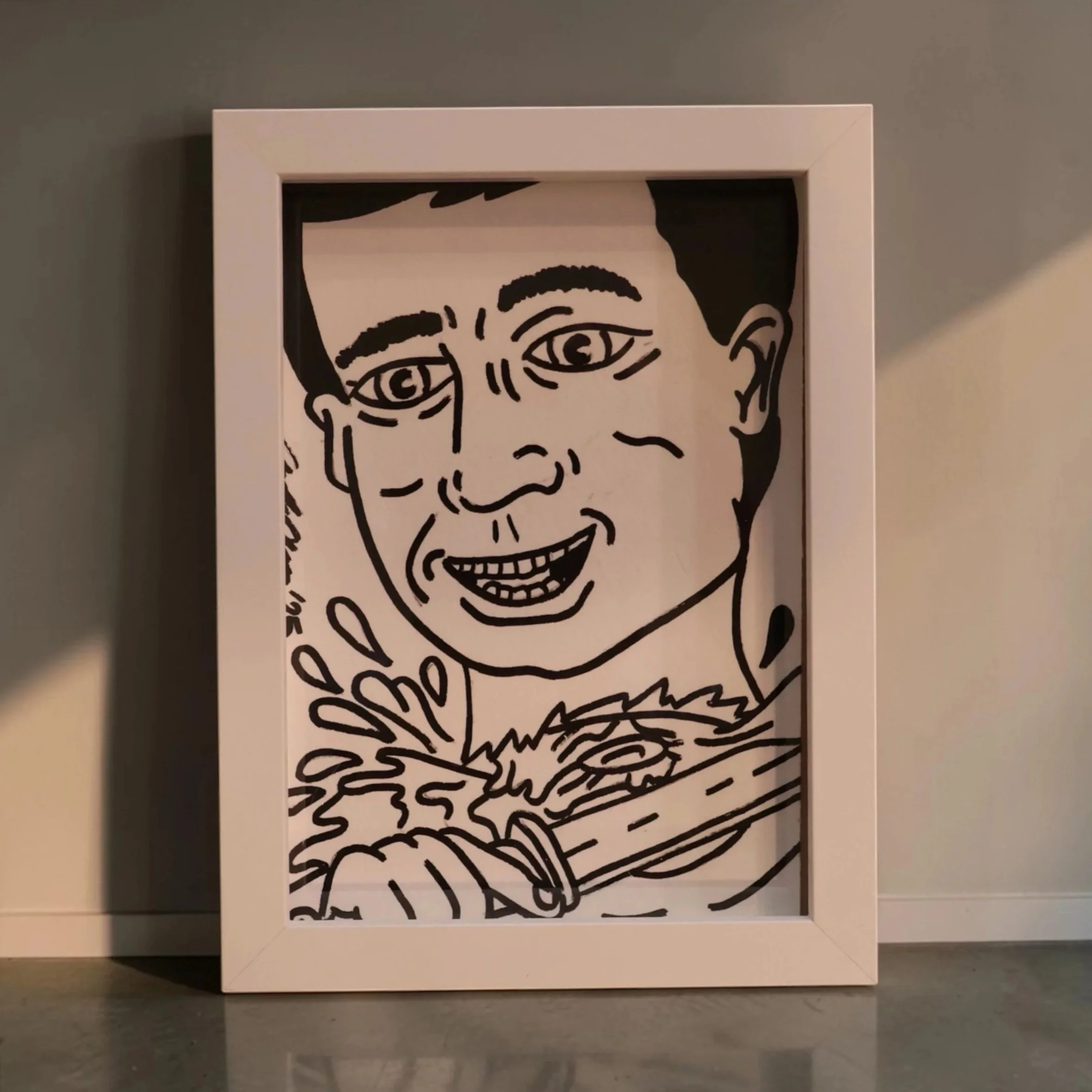
A man looks directly at the viewer with a large, carefully presented smile while harming himself. His expression appears friendly and composed, but his wide eyes and the violence occurring beneath his face reveal a completely different reality. The image captures the moment when an outward performance of happiness can no longer conceal the pain underneath it.
The smile represents the version of himself he presents to other people. It is exaggerated enough to feel unnatural, suggesting that appearing happy has become another responsibility rather than a genuine emotion. His eyes communicate what his mouth refuses to admit. They remain alert, frightened, and desperate to be noticed.
The close composition forces the viewer into an uncomfortable intimacy with the figure. There is no background, environment, or explanation to create distance from him. He appears to be posing for a portrait, turning the viewer into both witness and audience. The black linework makes the scene resemble a coloring-book illustration, creating a disturbing contrast between a familiar visual language and an act of profound despair.
Say Cheese explores the danger of assuming that a smiling person must be okay. It reflects how severe emotional suffering can exist behind humor, charm, routine, and a carefully maintained appearance. The painting asks viewers to pay attention to what exists beyond someone’s expression and to recognize that a smile is not always evidence of happiness.
If you are struggling, please talk to someone. You do not have to face it alone. In the United States, call or text 988 for free, confidential support 24/7. If you are in immediate danger, call 911 or go to the nearest emergency room.