 Image 1 of 1
Year: 2024
Size: 14 × 20 inches
Display: Floating art frame
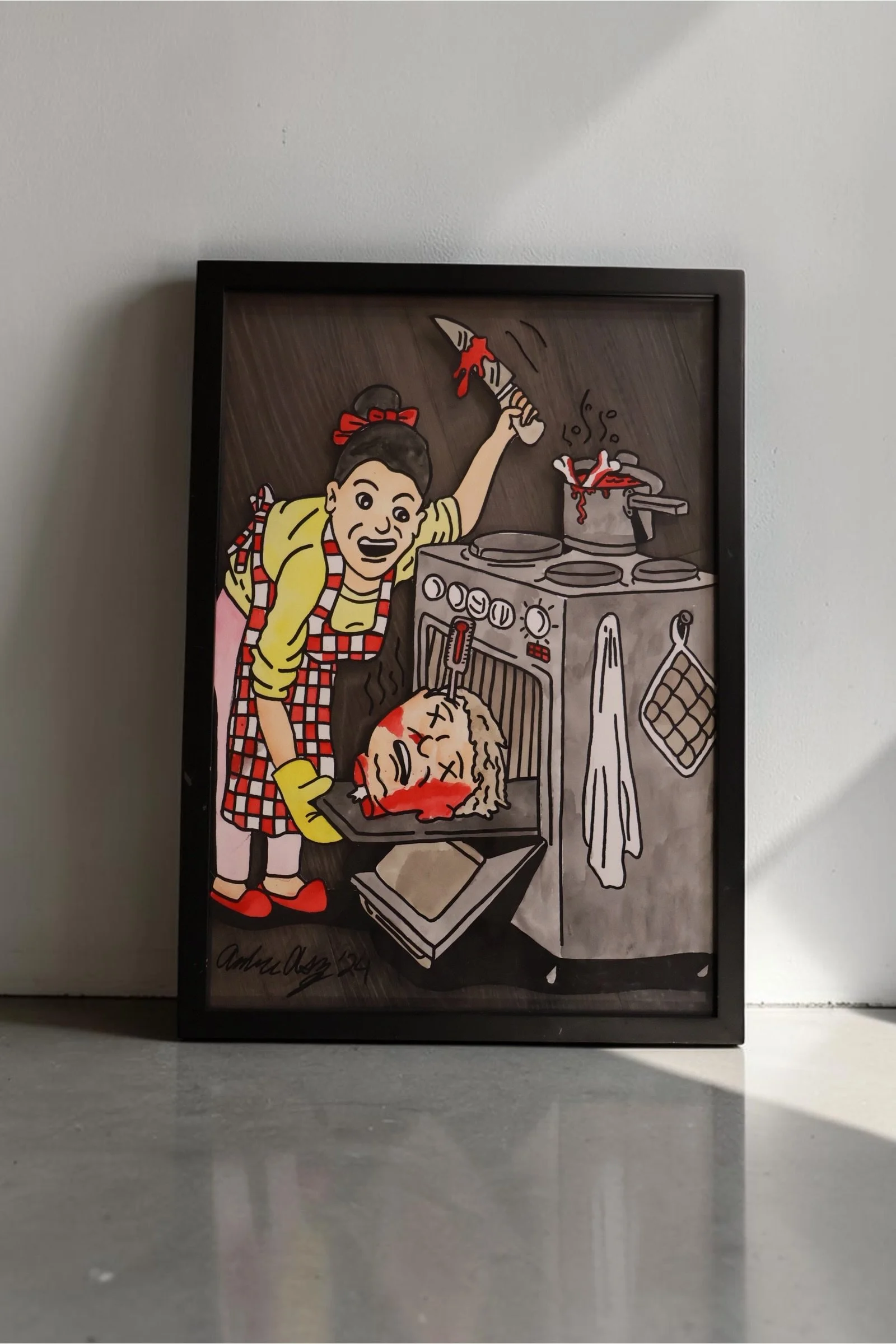
Medium: Watercolor cutout, paint-marker outlines, and hand-painted glass
A Woman’s Place confronts the outdated belief that women belong in the kitchen and should exist to cook, clean, serve, and satisfy others. Society has often treated domestic labor as a woman’s natural responsibility rather than real work, reducing women’s identity to what she can provide for everyone around them.
The painting reverses that objectification. Here, the man becomes the object being prepared and served, while the woman is no longer passive, obedient, or trapped. She controls the kitchen, the tools, and the entire scene. Her smile reflects the artificial cheerfulness women have historically been expected to maintain, even while carrying exhausting and invisible responsibilities.
The violence is intentionally absurd and symbolic. It represents the destruction of restrictive gender roles rather than violence against an individual. The kitchen becomes more than a place of confinement. It becomes a stage for rebellion, independence, and darkly humorous revenge.
Women are not decorations, servants, or supporting characters in someone else’s life. They are strong, complicated, empowered individuals who deserve the freedom to decide who they are, what they want, and how they choose to live. A woman’s place is wherever she chooses to be.