 Image 1 of 1
Skateboarding
Year: 2024
Size: 6 × 6 inches
Medium: Acrylic on canvas
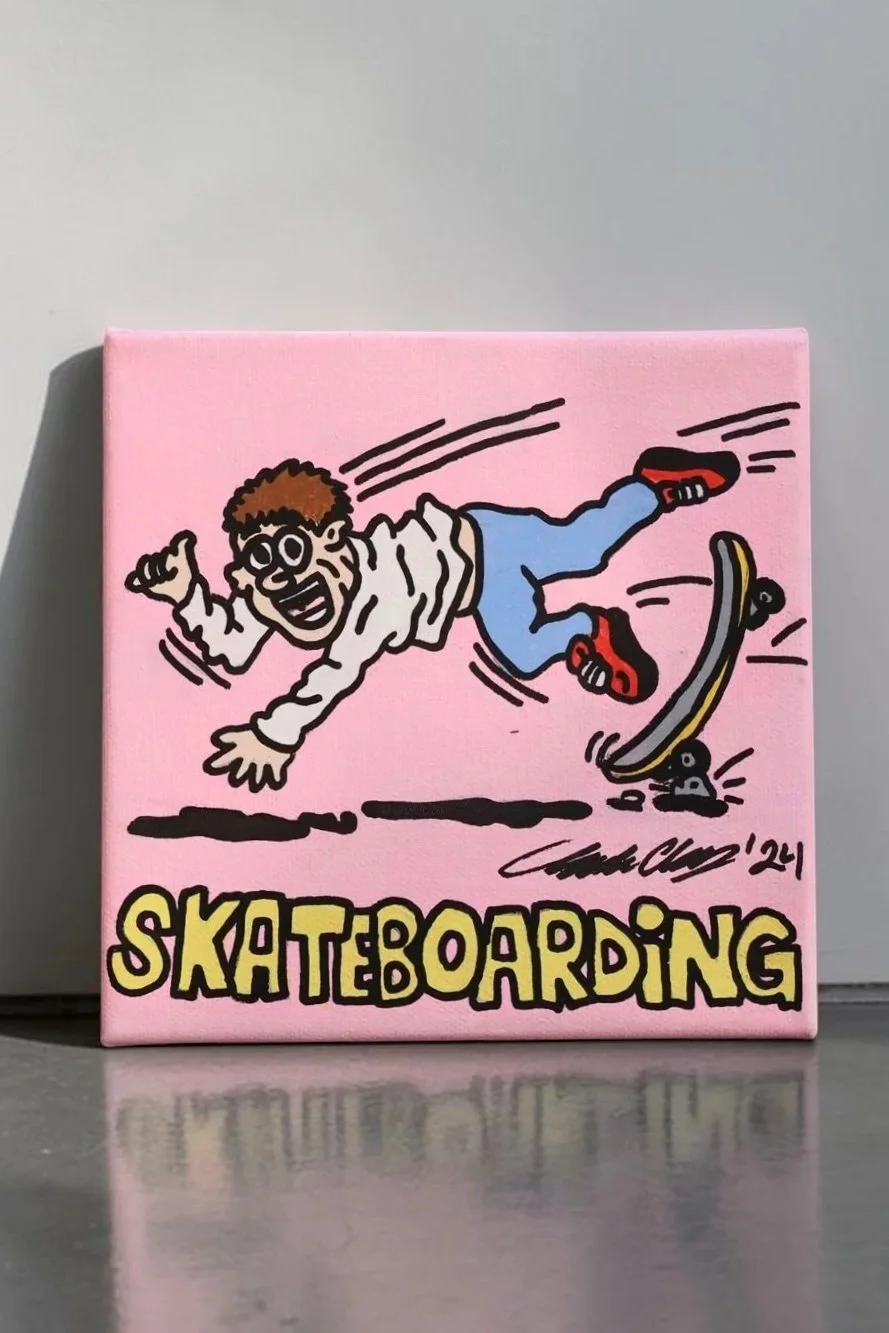
A skateboarder flies through the air after his wheel strikes a tiny pebble. His board stops abruptly, but his body continues forward, transforming an ordinary ride into a sudden fall. The pebble is almost comically small compared with the chaos it creates, reflecting a familiar truth within skateboarding: sometimes the smallest obstacle can produce the hardest impact.
Despite what is about to happen, the skateboarder is smiling. His expression does not suggest that he is unaware of the danger. Instead, it shows that he has already accepted the fall. He knows the pavement will hurt, but he also knows that pain is temporary and that falling does not mean the ride is over.
The painting captures the strange moment between losing control and hitting the ground. For a fraction of a second, the skateboarder is suspended in the air. He can no longer prevent the fall, but the pain has not arrived yet. Within that brief space, fear becomes freedom. He has nothing left to control, so he allows himself to experience the motion.
The pebble represents more than a physical obstacle. It can also symbolize the small, unexpected problems that interrupt life. A person may be moving confidently toward a goal when something seemingly insignificant changes everything. The size of an obstacle does not always determine the size of its consequences. A minor mistake, an unexpected comment, a sudden loss, or one badly timed moment can send an entire life in another direction.
Skateboarding teaches a person to accept this uncertainty. Falling is not separate from learning how to skate. It is one of the ways the body learns. Every scrape, bruise, and failed attempt becomes information. Pain teaches balance, timing, awareness, and commitment in ways that success cannot.
The skateboarder’s smile transforms the fall from a failure into a choice. He cannot choose whether he hits the ground, but he can choose what the fall means. He can treat it as proof that he should stop, or he can recognize it as part of becoming better. His happiness comes from knowing that the pavement cannot permanently take skateboarding away from him.
His open arms make him appear almost weightless. Rather than curling inward or protecting himself, he seems to embrace the experience. The pose suggests trust: trust in his body, trust in his resilience, and trust that he will still recognize himself after the impact. For this moment, he resembles someone flying more than someone falling.
That distinction is important because flying and falling can look almost identical from the outside. Both involve leaving the ground and surrendering control. The difference may exist entirely within the person experiencing it. One person sees disaster, while another sees movement, freedom, and a story worth surviving.
The image also reflects the physical honesty of skateboarding. The skateboard does not care about confidence, appearance, or intention. A pebble can stop anyone. The pavement treats beginners and experts equally, forcing every skater to remain humble. Skill may reduce the number of falls, but it can never remove risk completely.
The bright pink background and cartoon-like style turn a painful accident into something energetic and playful. The exaggerated movement, bold outlines, and large yellow lettering make the fall resemble a scene from a comic book. This visual humor softens the violence of the impact without denying it. Pain is present, but it is not given the final word.
Skateboarding is ultimately about resilience. The skateboarder accepts that doing what he loves will sometimes hurt him. He does not interpret pain as a command to quit. He falls, feels it, learns from it, and eventually places the board beneath his feet again.
The painting suggests that courage is not the ability to avoid every fall. Courage is the willingness to keep moving while knowing that another pebble may always be waiting. The skateboarder is smiling because he already understands what happens next: he will hit the ground, he will hurt, and then he will get back up.