 Image 1 of 1
The Spider's Web
Year: 2023
Medium: Acrylic on canvas
Dimensions: 12 × 24 inches
Artist: Andre Alsup
Inspiration: Religious corruption, institutional abuse, childhood innocence, and the exploitation of power.
Spiders are fascinating creatures. They build these elaborate webs, patiently waiting for something innocent and unsuspecting to get caught. Once something becomes trapped, the more it struggles, the harder it can be to escape.
I couldn't think of a better metaphor for the history of sexual abuse and its concealment within the Catholic Church.
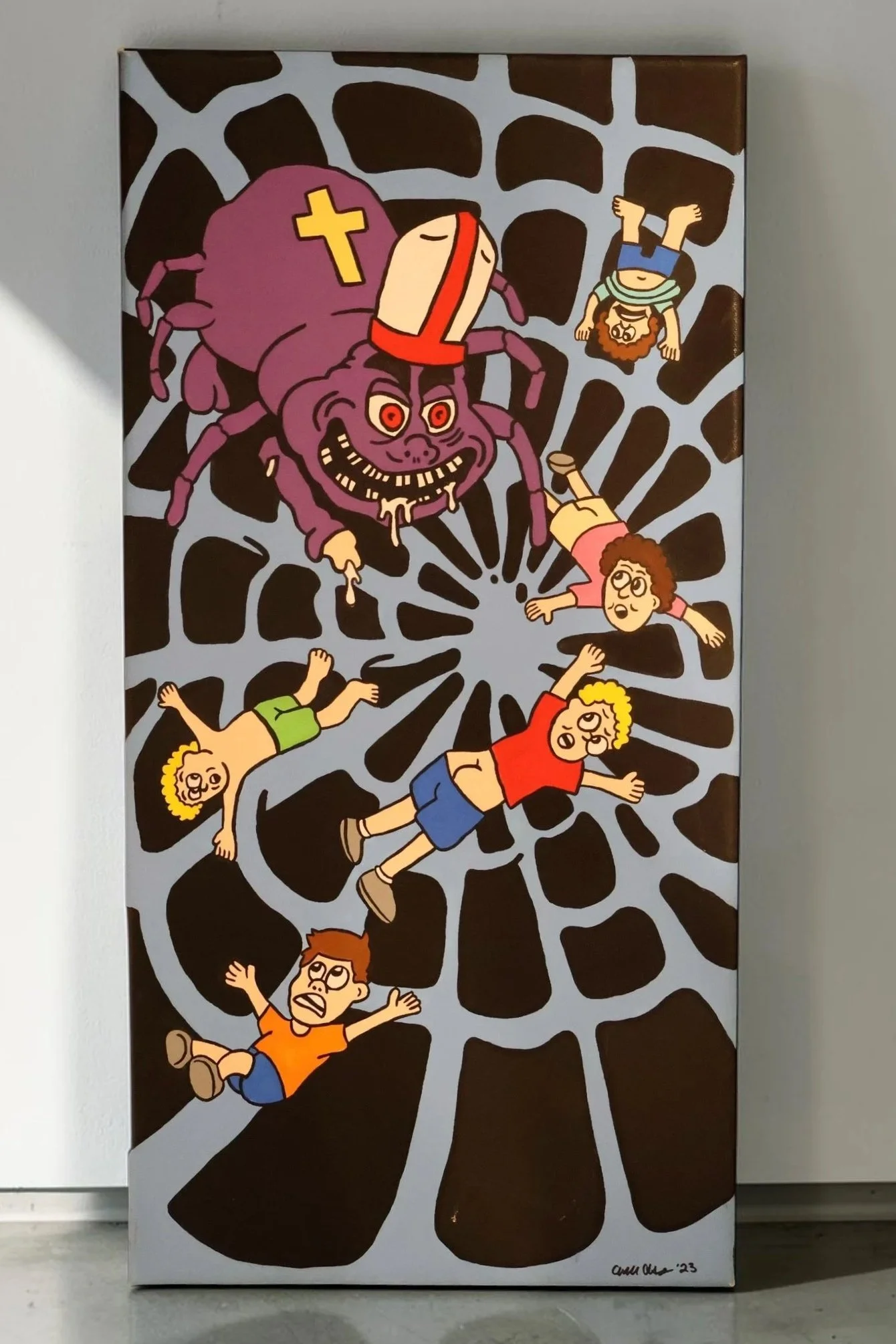
This painting depicts a monstrous purple spider wearing the traditional symbols of the Pope, complete with a golden cross and ceremonial hat. Beneath him, several young boys are caught in an enormous web, suspended helplessly while the creature watches over them with a disturbing grin.
It's colorful, cartoonish, and almost playful at first glance. But the longer you look at it, the more uncomfortable it becomes.
And that's exactly the point.
I wanted to create something that challenged the way we perceive authority, particularly when that authority presents itself as holy, trustworthy, and morally superior. The Catholic Church is an institution that millions of people have turned to for guidance, protection, and spiritual comfort. Yet its history also includes horrific cases of child sexual abuse committed by clergy, along with documented efforts by Church authorities to conceal abuse and protect perpetrators.
There's something especially disturbing about the betrayal of trust involved. Children are taught to respect religious leaders, to believe they are safe in their presence, and to view them as representatives of something good. When that trust is exploited, the damage can last a lifetime.
That's where the spider comes in.
The spider represents predatory authority. Its web represents the systems of trust, fear, secrecy, and institutional protection that can leave victims feeling trapped. The children represent innocence and vulnerability, caught in something they never chose and struggling against something far more powerful than themselves.
I deliberately chose a cartoonish style because I wanted the painting to be visually approachable while communicating something deeply unsettling. The bright colors and exaggerated characters create a strange contrast with the seriousness of the subject.
There's a grotesque absurdity to the image of a giant spider dressed as the Pope, but the subject behind that absurdity isn't funny.
This painting isn't intended as an attack on every Catholic, every priest, or religious belief itself. It's a criticism of the abuse of power and the institutions that have sometimes prioritized their own reputations over the safety of vulnerable people.
I've always believed that art doesn't have to be comfortable. Sometimes it should make people laugh. Sometimes it should make people think. And sometimes it should make people uncomfortable enough to ask questions they would rather avoid.
For me, this painting is about what happens when the people we are taught to trust become the very people we need protection from.
The most frightening monsters aren't always the ones hiding in the dark. Sometimes they're standing in plain sight, dressed in beautiful clothing, surrounded by symbols of goodness, and protected by the very institutions that should hold them accountable.
And sometimes the most dangerous webs are the ones we never realize we're walking into.