 Image 1 of 1
Year: 2024
Size: 5 × 7 inches
Display: Black frame
Medium: Watercolor
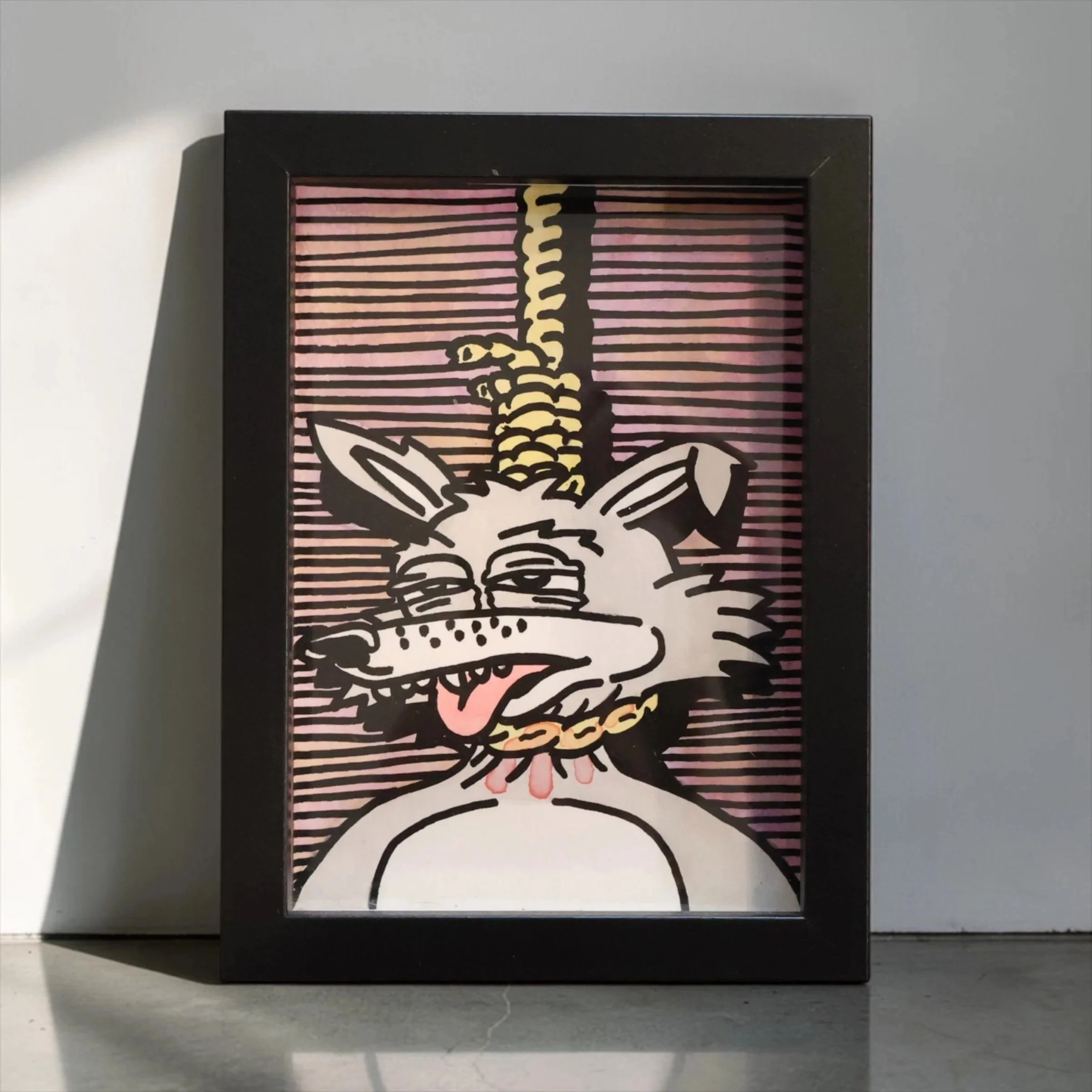
An anthropomorphic coyote hangs beneath a rope that wraps tightly around his neck and continues upward beyond the frame. His exhausted eyes, exposed teeth, and hanging tongue create an expression that could initially be mistaken for a cartoonish grin. Beneath that exaggerated appearance is a figure whose suffering has reached a point that others can no longer ignore.
The coyote represents isolation and survival. Coyotes are known for adapting to difficult environments and continuing to live alongside a world that often treats them as unwanted. Here, that natural resilience has been exhausted. The animal that normally howls to announce its presence is trapped in silence, suggesting that a person can appear strong and self-sufficient while privately reaching the end of what they can carry.
The continuous rope represents emotional pressure that has gradually tightened around the figure. It functions as both a restraint and the instrument of his destruction, showing how something that begins as a manageable burden can become impossible to escape. The repeated horizontal lines behind him create the appearance of a cage, emphasizing the feeling that every possible direction has been closed.
No One Heard Him Howl explores the dangerous distance between visible behavior and private suffering. The coyote’s expression hides pain behind humor and absurdity, reflecting how cries for help are sometimes disguised as jokes, strange behavior, or silence. The painting asks viewers to look beyond appearances and recognize the suffering that may exist beneath a familiar face.
If you are struggling, please talk to someone. You do not have to face it alone. In the United States, call or text 988 for free, confidential support 24/7. If you are in immediate danger, call 911 or go to the nearest emergency room.